
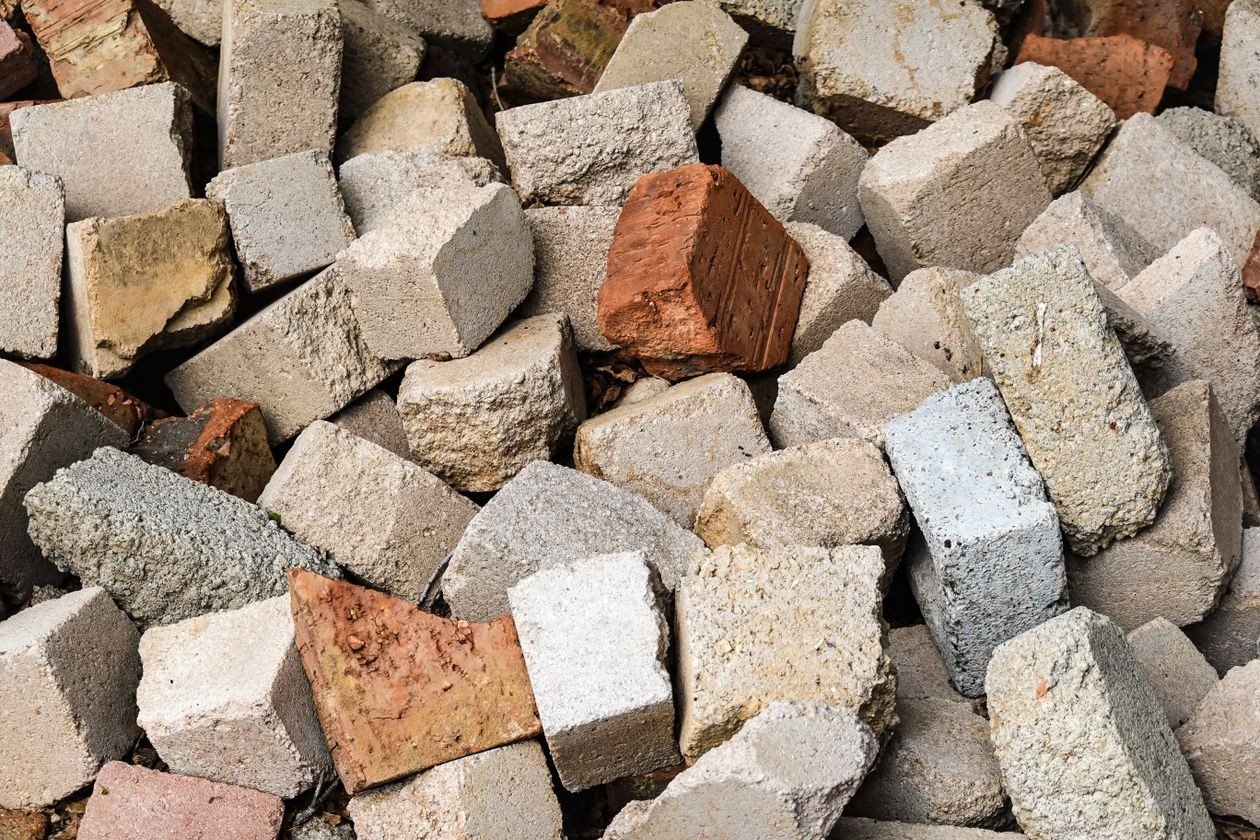
Here’s a fun dumpster fact that surprises almost everyone: you can fill a dumpster’s weight limit while it’s still mostly empty. Blame concrete, brick, and dirt. They don’t take up much room, but they weigh a ridiculous amount. If you’re tearing out a driveway, a patio, or a garden wall in the Tulsa area, this is the post that saves you from a surprise on the invoice.
Why Weight Matters More Than Size
Every dumpster rental includes a set amount of disposal weight. Ours includes 1 ton with the 15-yard and 2 tons with the 20-yard. Go over, and there’s an overage charge (currently $65 per ton). For normal household junk, you’ll rarely think about it. For heavy debris, you’ll think about it constantly.
How Heavy Are We Talking?
Commonly cited weights per cubic yard look like this:
- Solid concrete: about 4,050 pounds (roughly 2 tons)
- Brick: about 3,400 pounds
- Soil and fill dirt: about 2,700 pounds
Do the math on a real project. Say you break up a small patio and end up with 3 cubic yards of solid concrete. That’s around 6 tons, in a dumpster that’s only about 15 percent full. On a 20-yard with 2 tons included, you’d be roughly 4 tons over, or about $260 in overage. Nothing dramatic, but it’s the kind of thing you’d rather plan for than discover.
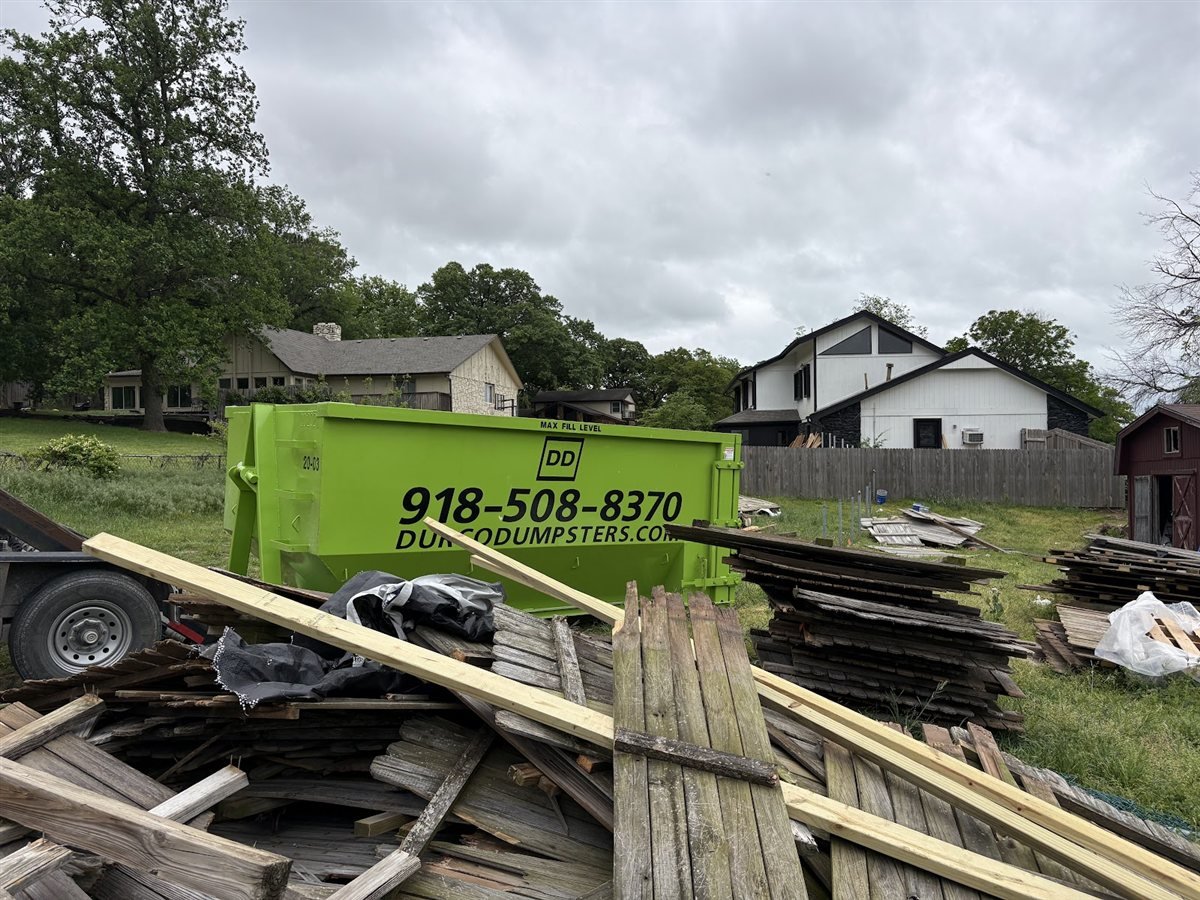
Projects That Make Heavy Debris
- Driveway, sidewalk, or patio removal
- Brick or block wall teardowns
- Landscaping and yard regrading (dirt, rock, and sod)
- Tile floors and shower tear-outs (tile and the mortar underneath weigh more than you’d expect)
- Roofing tear-offs (a stack of wet shingles is heavier than it looks)
How to Keep Heavy Debris From Wrecking Your Budget
- Estimate the weight before you order. Cubic yards times the weights above gets you close.
- Ask before you load. Rules for concrete, brick, and dirt differ from company to company and from landfill to landfill. Check before you fill the dumpster, not after.
- Keep it separate. Don’t mix heavy debris with a whole cleanout. It’s easier to plan one heavy load than to guess at a mixed one.
- Load it right. Heavy items on the bottom, spread evenly, and never above the fill line. Our loading tips walk through it.
- Check the prohibited items. Read our prohibited items list before you toss anything questionable.
For a full teardown, see how we handled a house demolition that took nine dumpsters, or check our pricing guide for the full cost breakdown.
Not Sure How Your Project Weighs Out?
Durco is a locally owned Broken Arrow company serving Tulsa, Bixby, Jenks, Glenpool, Owasso, Sand Springs, and Sapulpa. Call or text (918) 508-8370 with your project details and we’ll help you plan it, or book online.
Frequently Asked Questions
How much does concrete weigh?
Solid concrete is commonly cited at about 4,050 pounds per cubic yard, or roughly 2 tons.
What happens if my dumpster is over the weight limit?
You pay an overage charge for the extra tonnage. Ours is currently $65 per ton.
Can I put concrete or dirt in a dumpster?
It depends on the company and the landfill, so check before you load. Call or text us at (918) 508-8370 and we’ll help you plan.
Which size dumpster is best for heavy debris?
Weight is what matters, not size. Our dumpster size guide can help you match the project to the container.
Locally owned in Broken Arrow, serving the Tulsa metro. (918) 508-8370 | Mattd@durcodumpsters.com